With the new appointment management panel, when you accept a request you directly assign the provider, service, date, and time. The patient receives a single message with all the details of their appointment.
Step 1 — Open your pending requests
-
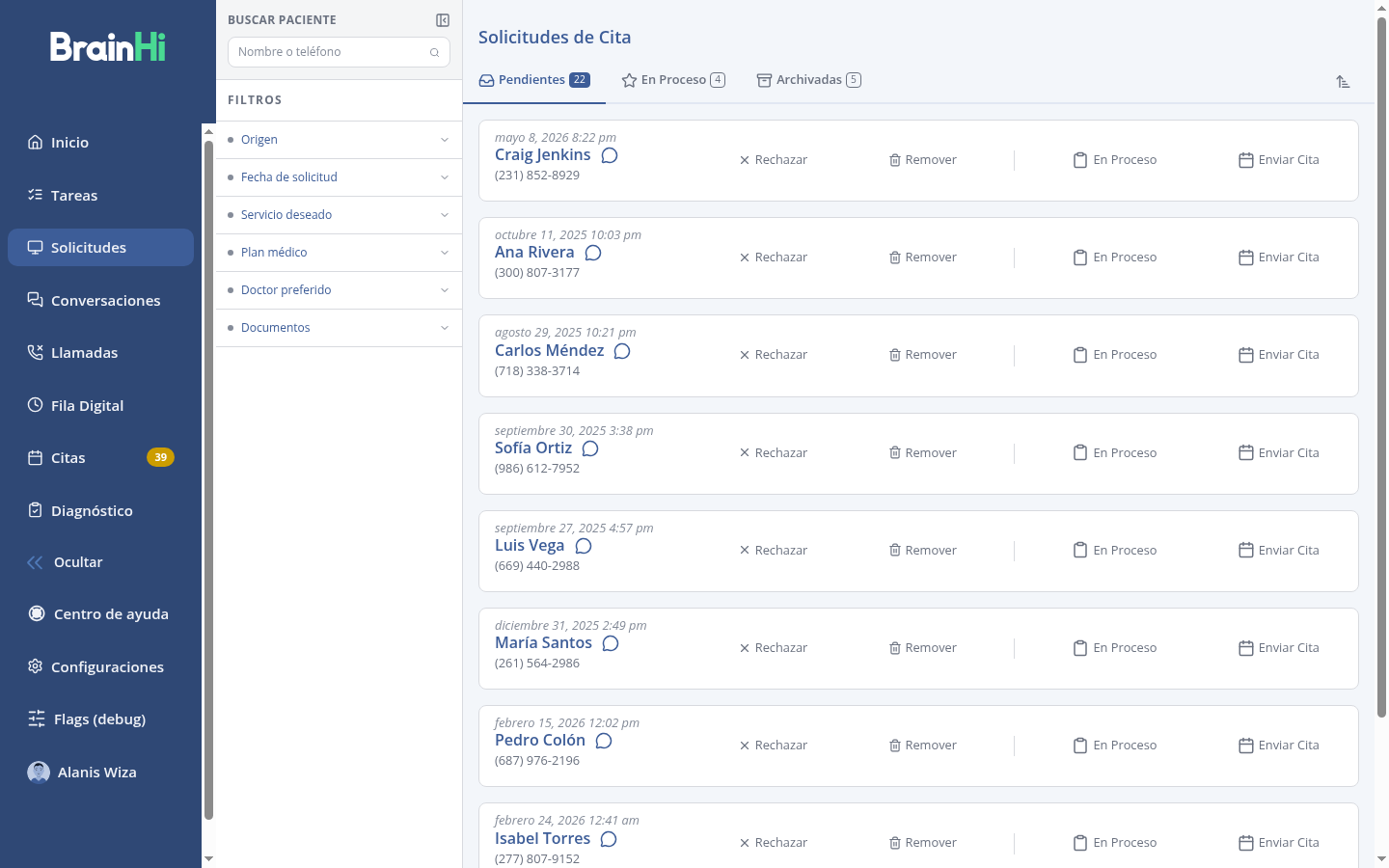
In the left menu of the portal, click Requests.
-
You will see three tabs: Pending (new requests awaiting action), In Progress (ones you marked to work on later), and Archived.
-
Use the filters on the left (desired service, insurance plan, preferred doctor, documents) to find a specific request.
Step 2 — Accept the request with date and time
-
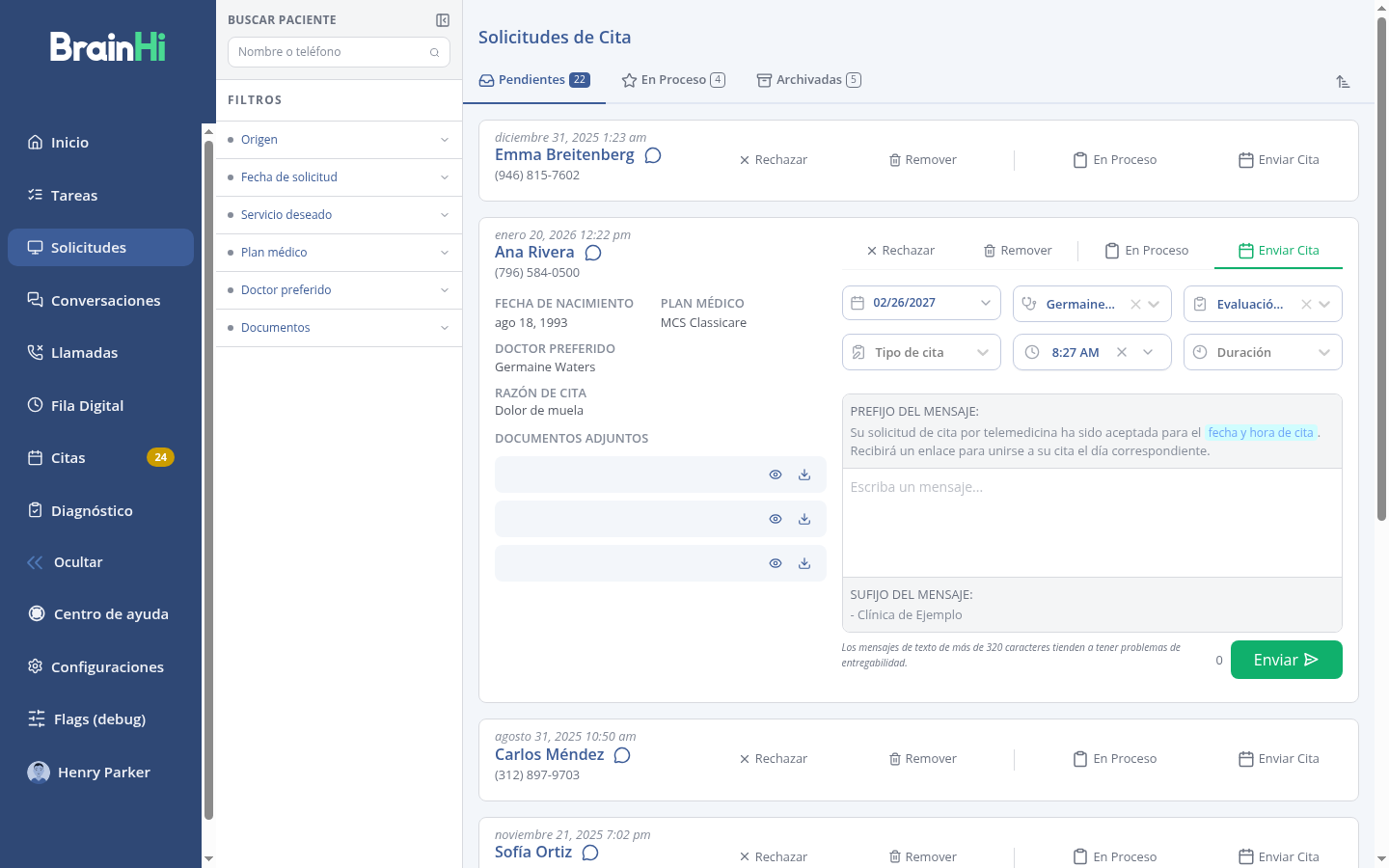
Find the request you want to work on and click Send Appointment (the green button to the right of the card).
-
The card expands and shows the information the patient submitted (reason for appointment, insurance plan, preferred doctor, attached documents).
-
Fill in the appointment fields:
- Date — choose the day on the calendar.
- Provider — who will see the patient.
- Service and appointment type.
- Time and duration.
-
Review the message the patient will receive. BrainHi automatically adds a prefix with the chosen date and time; you can write an additional note if you wish.
-
Click Send. The patient receives the notification with their appointment details.
Other available actions on each request
- In Progress — moves the request to the "In Progress" tab with an internal note (e.g., "waiting for insurance confirmation"). Useful when you cannot schedule it immediately.
- Reject — notifies the patient that you cannot accommodate the request. You can include a message with the reason.
- Remove — archives the request without notifying the patient.
Why you should always assign a date and time
If you accept a request without assigning a date and time, the patient receives a notification that their request was accepted without details about when their appointment is. For accounts with Proclaim we recommend always assigning the date and time when accepting, so that communication to the patient is complete and the appointment is correctly reflected in both systems.
Related Articles